Best Dash Cam in Ireland (2026): What to Buy and How to Get It Fitted
Which dash cam is worth buying in Ireland in 2026, what front, front-and-rear and three-channel systems cost supplied and fitted, whether hardwiring is worth it, how a camera protects your no-claims bonus and resale value, and where Irish law and data protection rules stand on recording the road.
For most Irish drivers the best dash cam in 2026 is a hardwired front-and-rear unit with a Sony STARVIS sensor, parking mode and a supercapacitor instead of a battery. Expect to pay from €180 for a front camera supplied and fitted, from €300 for front and rear, and from €400 for a three-channel taxi setup. Add a reversing camera if the car has none: it is the cheapest way to avoid the low-speed bump that costs you a no-claims bonus.
Search for the best dash cam and you get a list written for the UK or the US, priced in the wrong currency and fitted to cars we rarely see here. This guide is about Irish roads: dark, wet commutes on the M50, on-street parking in housing estates, hit-and-runs in supermarket car parks and a taxi trade that needs to record the cabin as well as the road. It covers what actually matters when you pick a camera, what it costs supplied and fitted, what a camera does for your insurance and resale value, and what the law says.
We fit dash cams every week at our workshop in Rosemount Business Park, Dublin 11. The picks below are cameras we stock and install, but the advice applies to any brand, and we hardwire Nextbase, BlackVue, Thinkware and VIOFO units that customers bring in.
The short answer
- Everyday car, tight budget: a 2K front camera such as the 70mai M310, from €180 hardwired, supplied and fitted.
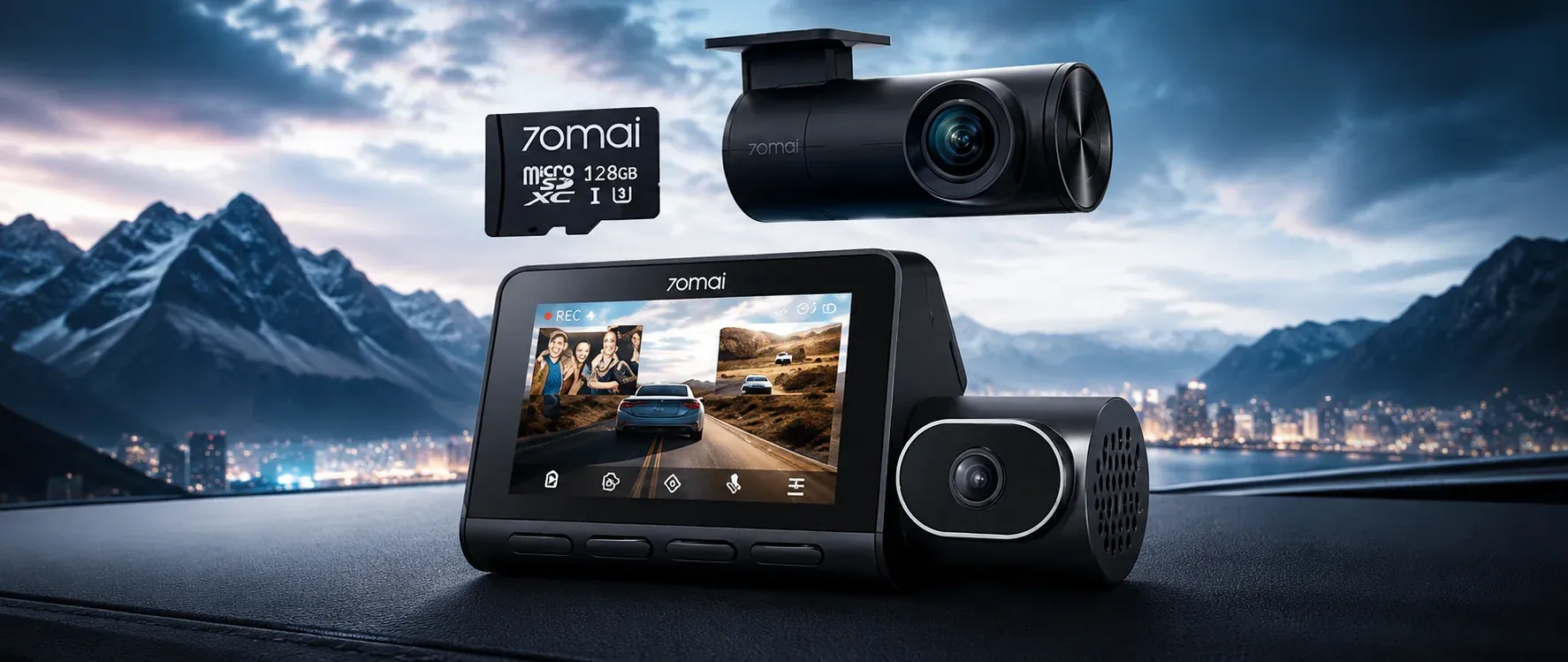
- Most drivers: a front-and-rear system. The 70mai A800SE 4K paired with its RC22 rear camera is the usual choice, from €300 supplied and fitted.
- Taxi, ride-share, chauffeur: a three-channel unit with an infrared cabin camera such as the 70mai T800, from €400 supplied and fitted.
- No screen clutter: a mirror dash cam with reversing camera, which replaces the rear-view mirror with a display, from €350 fitted.
- Everything in one unit: the 70mai X800 4K Omni, a rotating 360-degree camera for drivers who want to cover the sides of the car without a second unit.
- Car with no reversing camera: add one. A reversing camera on the factory or aftermarket screen is the upgrade that stops the bump in the first place, and it pairs with any of the cameras above.
Prices are starting prices for common cars and move with the camera model, the hardwire kit the car needs and whether you want parking mode set up. The full breakdown is on the dash cam installation page, and every camera we fit is in the shop.

What matters on Irish roads
Most reviews rank cameras on resolution. In Ireland the order of priority is different.
Night and rain performance
Half the year the commute home is in the dark, and it rains on a third of the days. A camera with a large Sony STARVIS sensor and HDR reads a number plate under sodium streetlights and through a wet windscreen. A cheap 1080p camera with a small sensor gives you a smeared white rectangle where the plate should be. If you only check one specification, check the sensor.

The weather is not a cliché here, it is the spec sheet. Met Éireann’s rainfall records put December as the wettest month of the year, with October, November and January close behind at roughly 130 to 140 mm each, and its sunshine records give December about one hour of sun a day. Put those two together and the winter commute is a wet windscreen in the dark, which is exactly the footage a small sensor cannot deliver. Before you decide between a 1080p bargain and a STARVIS camera, look at the Dublin forecast for the week and the monthly and annual weather statements for how the last twelve months actually went. The camera has to work on those days, not on the sunny afternoon it was reviewed on.
Parking mode
Most damage to parked cars happens with nobody at the wheel: a door swung open in a car park, a reversing van in an estate, a mirror knocked off on a narrow street. Parking mode records when the camera senses movement or an impact while the car is off. It only works with constant power, which means a hardwire kit to the fuse box, not the cigarette lighter socket.
Supercapacitor, not a battery
A dash cam sits behind glass in full sun in July and in frost in January. Lithium batteries hate both and swell over time. Cameras with a supercapacitor have no battery to fail, and they start reliably on a cold morning. The A800SE and the T800 use one; if you are comparing other brands, look for the word on the box.
2K or 4K
At 2K a plate is readable across a lane in daylight. At 4K it is readable two cars ahead and at night. The price difference is now small enough that we suggest 4K for the front camera if you drive on the motorway or at speed on national roads, and 2K for a town car.
GPS and an app
GPS stamps speed and location on the clip, which settles arguments about who was where. It is built into the T800 and available as a module on most other 70mai cameras. The app is standard on all of them and lets you pull a clip onto your phone at the roadside instead of taking the memory card home. Cameras with a 4G kit can also send an alert to your phone when the car is hit while parked, but they need a SIM and a data plan.
Front only, front and rear, or three cameras
Front only covers the road ahead and is enough if the car spends its nights in a driveway and its days in a company car park. It is the cheapest setup and the quickest to fit.
Front and rear adds a small camera on the rear glass, wired through the headlining. It records tailgaters and the shunt at the lights that the front camera never sees, and it is the setup insurers find most useful. This is what we fit most often.
Front, interior and rear adds an infrared camera pointing into the cabin. It is built for taxi and ride-share drivers, and it is the plan taxi drivers pick from our menu; the three-channel 70mai T800 is the camera we fit for it. Private drivers rarely need it.
Mirror dash cams put the front and rear cameras behind a display that clips over or replaces the factory mirror. There is nothing on the windscreen, and the rear feed doubles as a reversing camera. They suit older cars with no reversing camera and drivers who dislike a second screen on the dash.

Rear view in the rain: why the camera behind you matters most
Every camera in this guide records what happens. Only one kind of camera prevents it: the one that shows you what is behind the car before you move. A reversing camera on the dash screen, or the rear feed of a mirror dash cam, is the upgrade that pays for itself in Irish weather, and it is the one we recommend first to anyone whose car came without it.

Think about what the rear window gives you on a November evening. The glass is streaked, the heated element is still clearing it, the lights of the car behind are blurred into the rain, and the head-check over your shoulder shows you a wet C-pillar and not much else. A reversing camera sits low on the tailgate, looks straight down at the kerb, the bollard, the trolley and the child on a scooter, and shows all of it in one wide, bright picture on the screen with guidelines that bend as you turn the wheel. The camera lens is small enough that rain runs off it, and the modern HD units we fit read fine in the dark because the reversing lights are pointing exactly where the lens is.
Bright sun is the other half of the same problem. Irish sun sits low for most of the year, and from October to March it is barely above the rooftops at school-run time. Reverse out of a space with the sun behind the car and the rear window and both mirrors turn white; reverse with it in front and the mirror throws it straight into your eyes. A reversing camera does not squint. The lens sits low in the shade of the bumper, the HDR sensor in the units we fit balances the bright sky against the dark tarmac, and the screen shows the kerb, the trolley and the child’s bike at the same brightness whether the sun is out or the rain is down. Wet tarmac with a low sun on it is the worst of both, a mirror full of glare over a road you cannot read, and it is the one condition where the camera view is not just easier but the only clear one you have.
That is why we recommend it in this order: reversing camera first if the car has none, then the dash cam. One stops the bump. The other proves who caused it.
The safety case, in numbers
The blind zone behind a car is bigger than most drivers think. Stand a child behind a hatchback and they disappear from the mirror at a couple of metres; behind an SUV, a pickup or a van the zone stretches to several car lengths. That is why the United States has required a rearview camera on every new car since 2018, and why the Insurance Institute for Highway Safety notes that young children are frequently the victims of backover crashes. IIHS research on real-world crash data has found that cars with a rearview camera are involved in noticeably fewer reversing collisions than cars without, in the region of a sixth fewer, with the biggest gains on the largest vehicles.
The Irish version of that statistic is quieter but just as real: the low-speed reverse in a supermarket car park, the bumper against a bollard outside the school, the neighbour’s car on a narrow estate road, the bike left behind the van. None of them make the news. All of them cost money, and some of them hurt someone.
Who benefits:
- Your passengers. A camera lets you reverse out of a space at a walking pace with your eyes forward and on the screen, instead of twisted round in the seat with a blind quarter on each side.
- Children and pets. The camera sees the height a mirror cannot: a toddler on a driveway, a dog behind a van, a buggy parked behind the boot.
- Pedestrians and cyclists. Reversing out of a driveway onto a footpath is the manoeuvre where cyclists and walkers appear from nowhere. Guidelines on the screen show you exactly where the bumper will be before it gets there.
- Other cars. The dented door in the car park next to you is an at-fault claim on your policy. The camera is cheaper than the excess.
What the camera does to your insurance premium
Insurers in Ireland do not generally give a discount for a dash cam, and none we know of gives one for a reversing camera. The money is not in the discount. It is in the claim you do not make and the claim you do not lose.
- An at-fault reversing claim costs you the excess, the no-claims bonus and a loaded premium for several renewals. A reversing camera fitted from about the price of one excess is the cheapest way to make that claim not happen.
- A disputed claim with no footage often ends up settled as split liability, which counts against both drivers. Front-and-rear dash cam footage moves the same incident onto the other driver’s policy, and your bonus stays where it was.
- A hit while parked with no witness is a claim on your own policy or a bill out of your pocket. Parking mode on a hardwired camera turns it into a plate number and a time stamp.
So the honest answer to “will a camera lower my insurance” is no, but it will stop it going up, and after one incident that is worth far more than any discount.
Resale: a camera the next owner wants
A reversing camera that shows on the factory screen, and a dash cam hardwired so the cable is invisible, are among the first things buyers ask about on a used car. On a family SUV, a van or a seven-seater the reversing camera is close to expected now, and a car without one is the one that gets the lower offer. A tidy install with photos of the wiring and the receipt from a workshop gives you a reason to hold your price, and because our installs are reversible, you can also take the cameras with you and refit them in the next car for a fitting fee.
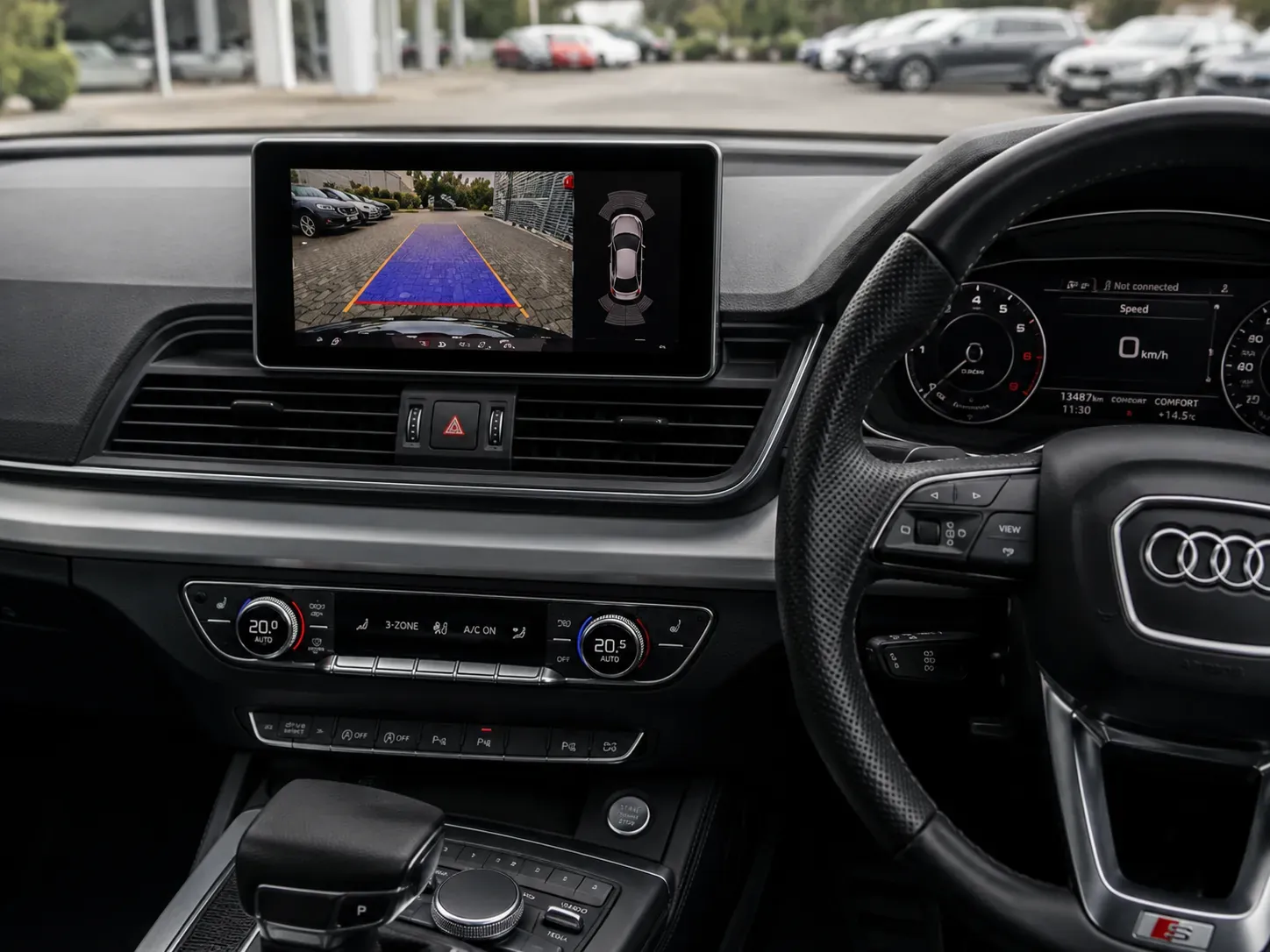
Our guide to choosing a reversing camera goes through camera types and screens; the Audi A3 reversing camera install and the 2013 Audi A6 with CarPlay and a reversing camera show what the finished job looks like, and the latest jobs page has more.
Large vehicles: where the camera is the only rear view
The bigger the vehicle, the smaller the view from the driver’s seat. A Transporter, a Vito or a Sprinter panel van has no rear window at all, so the mirrors are the only way to see behind it and the metre directly behind the doors is invisible. A pickup has a high tailgate and a load bed. A camper van or a motorhome carries a bathroom where the rear window would be. A seven-seater SUV has three rows of headrests between the driver and the back glass. For all of them a reversing camera is not a comfort feature, it is the rear view.
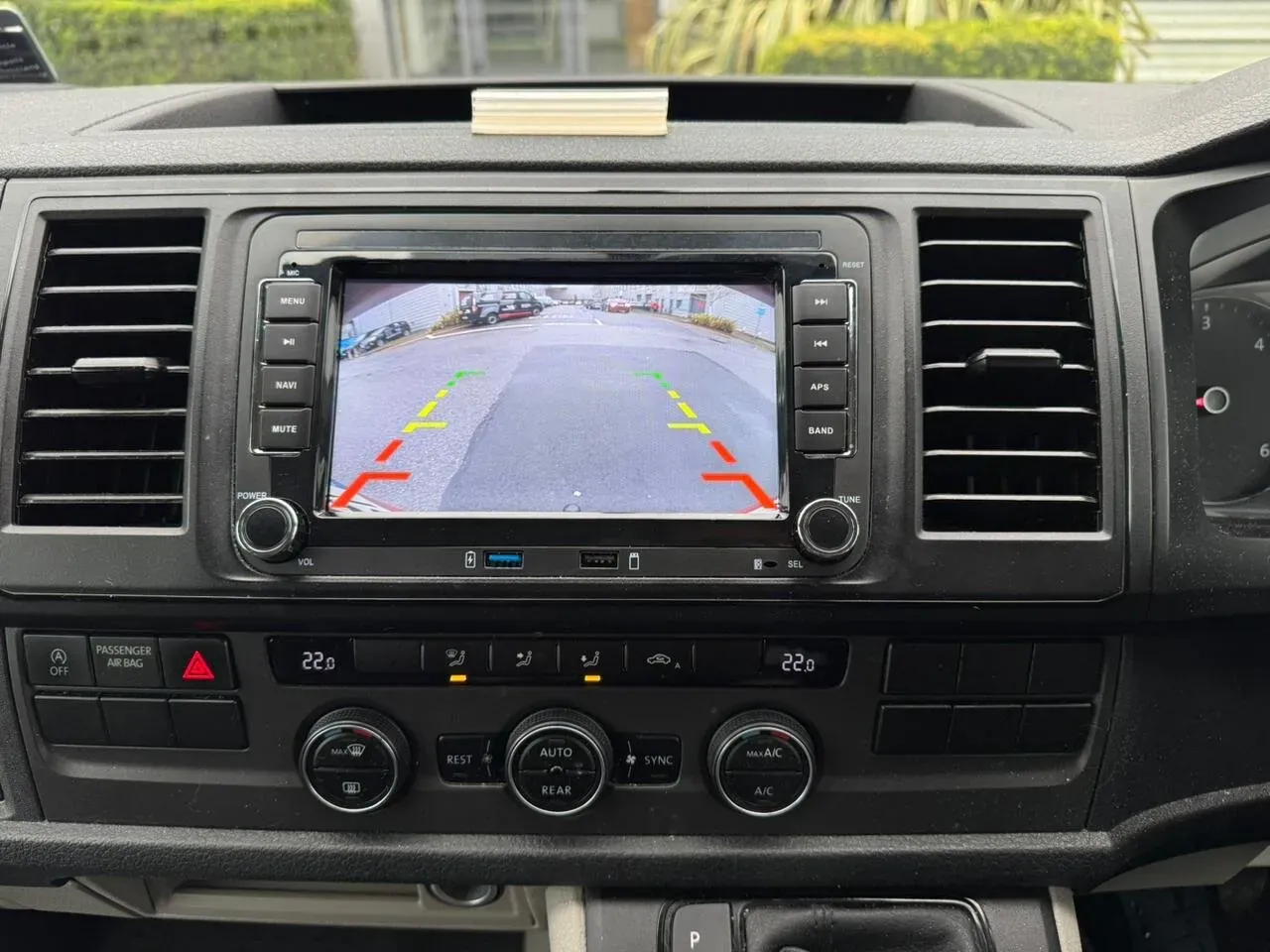
We fit cameras to vans and campers every week: a bracket camera above the rear doors on a panel van, a number-plate camera on a pickup, a camera wired the length of a motorhome into a mirror monitor or the head unit. The Fiat Ducato camper van upgrade walks through one of them in detail, reversing camera included. Add parking sensors on a van and the driver gets a beep for the bollard the camera is not pointed at.
Wireless dash cams: what the word means
“Wireless dash cam” is one of the most searched phrases in Ireland and it causes a lot of confusion. Nearly every camera sold as wireless still needs a power cable. Wireless means it connects to your phone over Wi-Fi, so you can view and download clips without touching the camera. A rear camera can also be wireless in the sense that it sends video to the front unit over radio rather than a cable, but it still needs its own power feed.
A camera with no cables at all would run on a battery for an hour or two and then stop. For continuous recording you want power from the car, and the neat way to do that is a hardwire kit.
Plug-in or hardwired
A plug-in camera takes power from the 12V socket. It works, it is cheap, and the cable runs across the dash. Parking mode does not work, because most cars cut the socket when the ignition goes off, and if the socket stays live the camera can flatten the battery.
A hardwired camera takes power from the fuse box through a kit with two feeds: one that is live with the ignition and one that is always live. The kit watches battery voltage and cuts the camera off before the battery drops too low. The cable runs behind the A-pillar trim and the headlining, so the only visible part is the camera itself. Hardwire kits cost €30 to €60, for example the 70mai UP06 with adjustable cut-off voltage or the OBD kit that plugs into the diagnostic port without touching a fuse. On the installation page you can see how we route the cable and where the module sits.
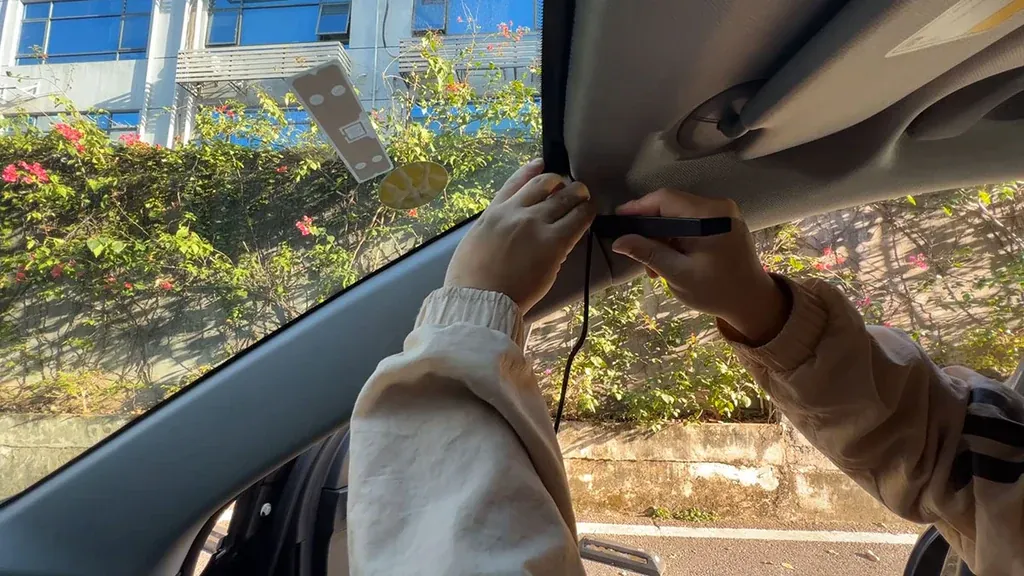
Hardwiring is reversible. A fuse tap sits in an existing fuse slot; nothing in the factory loom is cut. It does not affect the manufacturer warranty on the car.
Is a dash cam legal in Ireland?
Yes, and Gardaí will accept the footage as evidence. Three things to get right:
- Placement. The camera must not obstruct your view of the road. The safe spot is high on the windscreen, tucked behind the rear-view mirror inside the area the wipers clear. An NCT tester will fail an item that hangs into the driver’s line of sight, so keep it out of the swept area in front of the wheel.
- Data protection. Recording for your own use, for example to hand a clip to your insurer or the Gardaí after a collision, is personal use and is fine. Posting a clip of an identifiable driver or pedestrian online can bring you inside data protection law, so keep footage private unless you are reporting an incident.
- Taxis and passengers. If the cabin camera records passengers, you are processing their personal data as a business. That means a notice in the car telling passengers they are being recorded, a short retention period and no sharing outside a complaint or an incident. The Data Protection Commission publishes guidance for taxi and hackney drivers; read it before you switch the interior camera on.
Insurers in Ireland do not generally give a discount for a dash cam, but a clip settles a disputed claim in days rather than months and protects your no-claims bonus when the other driver changes their story.
What fitting costs in Ireland
You can fit a plug-in camera yourself in ten minutes. Hardwiring takes trim tools, a fuse diagram for the car and care around the curtain airbag that lives in the A-pillar of most cars built after 2005. A rear camera through the tailgate rubber grommet is the fiddliest part of any install.
At our workshop the fitting includes the hardwire kit setup, hidden cable routing, parking mode and low-voltage cut-off configuration, formatting the memory card, and a test of power, recording and parking mode before the car goes back to you. Supplied and fitted:
- Front camera from €180
- Front and rear from €300
- Front, interior and rear from €400
- Mirror dash cam with reversing camera from €350
- Reversing camera on its own: quoted by car, see the reversing camera page
If you already own a camera, send us the model and your registration and we will quote the fitting. Every install comes with a one-year manufacturer warranty on the hardware and the same engineers to come back to. Book through the dash cam installation page or message us on WhatsApp. If you are comparing us with a fitting chain, our Halfords dash cam fitting comparison sets out what each price includes.
Our picks for 2026
| Driver | Camera | Why |
|---|---|---|
| Town car, budget | 70mai M310 2K | Compact and screenless, 2K, app control, 24-hour parking surveillance, cheapest route to a clean hardwired install |
| Commuter, motorway | 70mai A800SE 4K + RC22 rear | True 4K front with hardware HDR and night vision, 1080p rear camera, supercapacitor, parking mode |
| Taxi, ride-share | 70mai T800 | Dual 4K front and rear plus infrared cabin camera, 128 GB card included |
| Wants full coverage from one unit | 70mai X800 4K Omni | Rotating 360-degree lens with AI motion tracking while parked |
| No screen on the windscreen | Mirror dash cam with reverse | Front and rear recording behind the mirror, reversing view on the same display |
| Car, van or camper with no rear view | Reversing camera | Wide, bright view of the metre behind the bumper, guidelines on the screen, the bump that never happens |
The best dash cam is the one that is recording when something happens. Choose the sensor over the megapixels, hardwire it so parking mode works, get it fitted so the cable is not the first thing a passenger sees, and if the car has no reversing camera, put that on the list first.
Published 17 September 2026