Can You Put Ambient Lighting in Any Car? Cost, Kits and Professional Fitting in Ireland
What ambient lighting is, whether it can be retrofitted to an older or cheaper car, what a DIY kit gets you compared with a professional install, and what a 64-colour app-controlled system costs in Ireland.
Yes. Ambient lighting can be retrofitted to almost any car, from a ten-year-old Golf to a new EV, using fibre-optic lines in the trim seams and LED strips in the footwells, all wired to one control module. A professionally fitted 64-colour app-controlled system in Ireland starts from about €799 depending on the car; a DIY kit costs €30 to €150 but rarely hides its wiring.
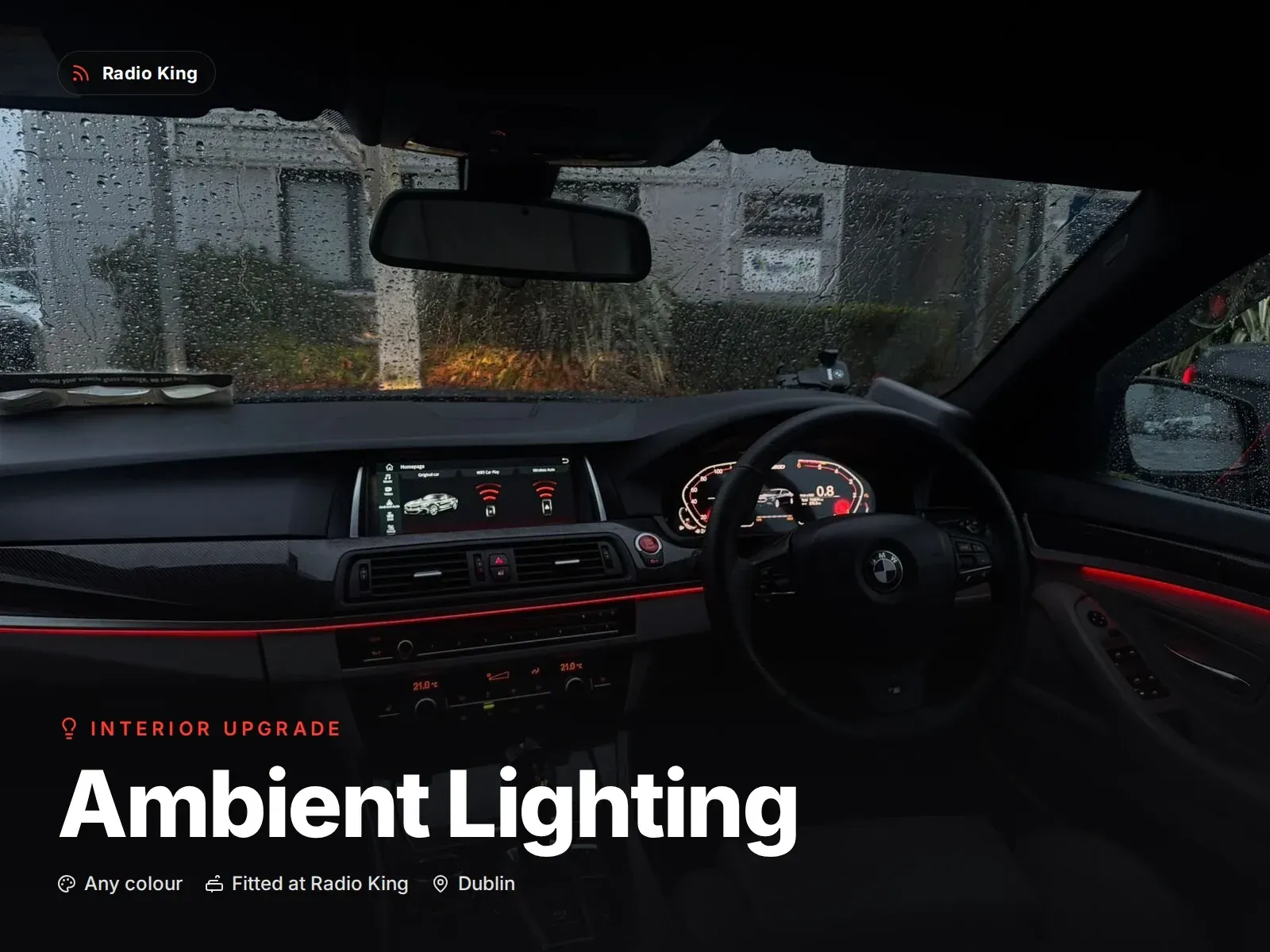
Ambient lighting used to be the thing that told you a car was a Mercedes. Sixty-four colours along the dash, a glow in the door pockets, footwells that lit up when you opened the door. It is now the most requested interior upgrade at our Dublin workshop, and the first question is nearly always the same: can it go in my car? The answer is yes, in nearly every case. This guide explains what ambient lighting actually is, what separates a €40 strip kit from a factory-look install, what it costs in Ireland and how the fitting is done.
What ambient lighting is
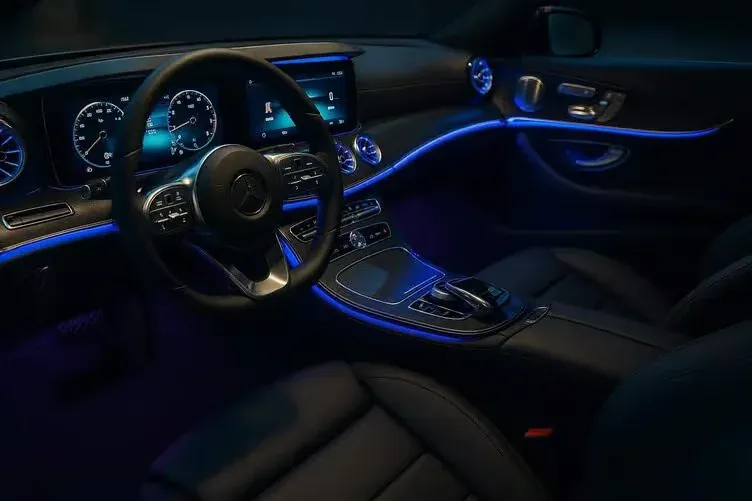
Ambient lighting is indirect light built into the interior trim. It is not a lamp; it is a line or a wash of light you see but whose source you do not. In a factory system it comes from three places:
- Fibre-optic lines that run along the seam between the dashboard and the trim, around the centre console and along the door cards. A single LED at the end of each line lights the whole run evenly.
- LED strips in the footwells and under the front seats, which wash the floor with light for rear passengers.
- Accent points in cupholders, door handles and storage trays, so you can find things in the dark.
All of it is dimmable and usually colour-selectable, and it switches off with the ignition. The point is orientation and atmosphere at night without the glare of a dome light.
Can you put ambient lighting in any car?
Yes. A retrofit system works on the same principle as the factory one: fibre lines seated into the trim seams, strips in the footwells and one control module behind the dash. What it needs from the car is a 12V supply and trim that comes off and goes back on, which describes every car built in the last thirty years.
A 2012 Golf, a Corolla, a Tesla Model 3 and a Range Rover all take the same system. The car’s age and price do not decide the result; the interior layout does. A dash with a clear seam between the upper and lower halves gives a perfect line. A flat, one-piece dash gets footwell and door lighting instead, and it still looks factory.
Two genuine limits. We do not run lines through areas where the passenger airbag deploys, so on some cars the dash line stops short of the glovebox. And on a leased car, ask the leasing company first; the install is reversible, but the lease may still require permission.
Kit or professional install
Search “ambient lighting car kit” and you will find strip kits from €30. They are worth understanding before you buy one.
What a kit gives you. Four or more LED strips with adhesive backing, a plug for the 12V socket or wires for the fuse box, and a remote or a phone app. Stuck along the footwells and under the dash, they make the floor glow, and for €40 that is honest value.
Where kits fall down.
- The strips are visible. You see the LEDs and the tape, not a line of light.
- Power comes from the 12V socket, so a cable runs across the console, and on cars where the socket stays live the strips drain the battery.
- Adhesive lets go in a hot car by the second summer.
- Colours do not match between strips, and there is no dash or door line, only floor light.
- Anything wired straight to the battery, without a fuse, is a fire risk.
What a professional install gives you. Fibre-optic lines seated inside the trim seams so you see the glow and not the source, LED strips hidden under the seats and behind the footwell trim, and every zone wired back to one control module. Power comes from a fused, ignition-switched circuit, so the system sleeps with the car and never touches the factory wiring. Trim comes off with the right tools and goes back with no marks and no rattles. The app controls each zone separately, all 64 colours, brightness, music-reactive modes and a welcome sequence when the door opens. The ambient lighting installation page shows the zones and the app.
If you want the floor to glow for a few euro, buy a kit. If you want the interior to look like it left the factory that way, it is a trim-off job.
The zones
A full install is built from zones, and you choose which ones you want:
- Dashboard and centre console. A fibre line the length of the dash and around the console, following the seam. This is the zone that makes the interior look factory-fitted.
- Door cards, front and rear. A line along each door so the light carries through the cabin instead of stopping at the dash. Handle and pocket recesses can be lit as well.
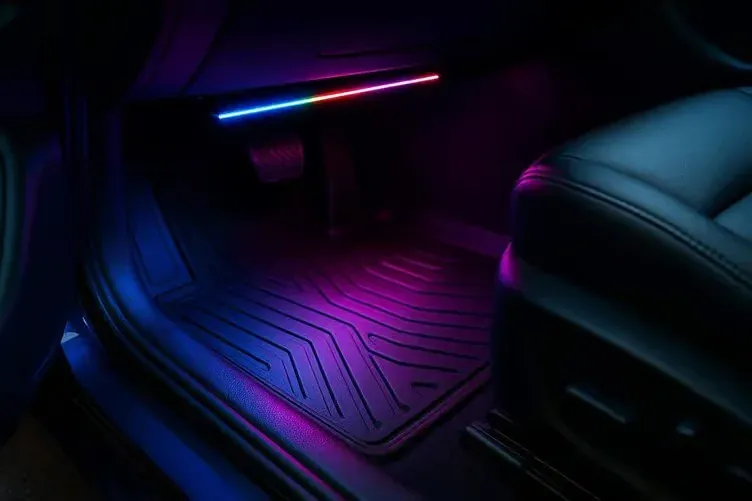
- Footwells. RGB strips under the dash in front of each seat. Bright enough to find a dropped phone, dim enough not to reflect in the glass.
- Under-seat glow. Strips under the front seats that light the rear floor.
- Extras. Speaker ring accents, cupholders, storage trays.
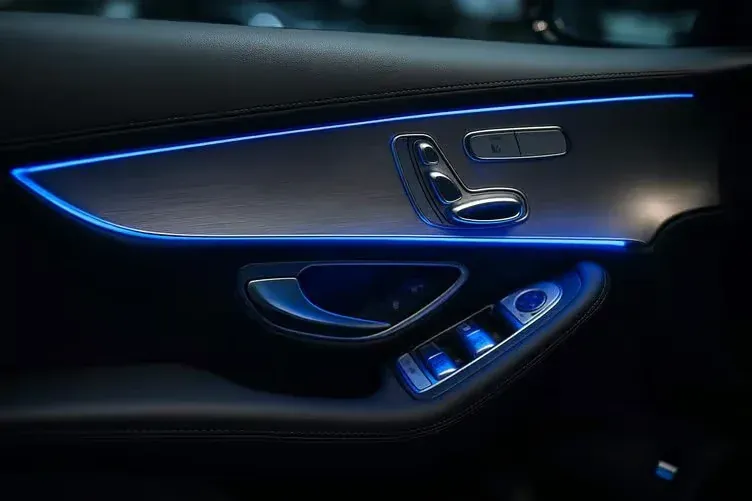
Each zone can have its own colour and brightness, so a warm white on the dash and a deep blue in the footwells is a normal setup. Music-reactive modes read the cabin audio and pulse the lighting with it, which is a party trick on the driveway and a distraction on the M1, so it has an off switch.
What it costs in Ireland
- DIY kit: €30 to €150, plus your Saturday.
- Professional fibre-optic system: from €799 at our workshop, depending on the car and the zones. A small hatchback with dash, doors and footwells sits near the starting price; a large SUV with rear doors, under-seat lighting and accents costs more because there is more trim to remove and more line to run.
- Time: most cars are booked in for the day and go home the same evening.
The price includes the kit, the fitting, testing of every colour and mode, and a walkthrough of the app before you leave. Hardware carries a one-year manufacturer warranty, and there is a 30-day money-back guarantee on the system, excluding labour, if you decide it is not for you.
Is it legal, and is it distracting?
Interior lighting is legal in Ireland. Two rules of thumb keep it sensible. Keep the brightness low enough that nothing reflects in the windscreen or side glass at night; a good system remembers a driving brightness and a parked brightness. And do not run flashing red or blue light that can be seen from outside the car, which is reserved for emergency vehicles. Ambient lighting that stays inside the cabin at a steady colour is no more distracting than the instrument cluster.
Is it worth it?
Three reasons customers give after the fact. Night driving is calmer because you can see the cupholders, the door pocket and the floor without reaching for the dome light. The car feels a class up inside, which is the honest reason most people do it. And when the car is sold, a factory-look lighting upgrade is one of the first things a buyer notices on a test drive in the evening.
Worth doing on the same visit
An ambient lighting install has the door cards, the sills and part of the dash out for most of a day. That is the moment to run any other cable the car needs, because the labour of opening the trim is already paid for once instead of twice.
- A reversing camera. The cable from the tailgate to the screen runs along the same sills and headlining. On a car that came without one it is the safety upgrade that pays for itself on a wet Dublin evening; the reversing camera page has the options, and the Audi A3 reversing camera install shows the finished result on the factory screen.
- A hardwired dash cam. The A-pillar trim is off anyway, so the power lead to the fuse box takes minutes. Our best dash cam in Ireland guide picks the camera; the dash cam installation page has fitting prices and the cameras are in the shop.
- Parking sensors. Rear sensors share the tailgate route with the camera. See parking sensors.
- CarPlay on the factory screen. If the car’s screen is the reason it feels its age, a CarPlay interface fitted at the same time gives the interior the second half of the upgrade. The 2013 Audi A6 got CarPlay and a reversing camera in one visit.
How we fit it
- Book a check. Send your registration or the model and the zones you have in mind. We confirm what suits the interior and quote it.
- Drop the car in. We confirm zones and colours with you at the counter.
- Trim off, loom in. Door cards, sills and dash sections come off with proper tools. The loom is routed along factory paths, wrapped and clipped, and every zone ends at one module hidden behind the dash. No factory wiring is cut and airbag areas are left alone.
- Test and hand over. All 64 colours, brightness, music modes and the welcome sequence are tested, then we set the app up on your phone before you drive off.
We fit BMW, Audi, Mercedes, Porsche and Lexus most often because owners of those cars know the factory option, but the system is the same for a Hyundai or a Skoda. The workshop is in Rosemount Business Park, Dublin 11, near Finglas and Blanchardstown, and we take cars from across Ireland by arrangement. Details and booking are on the ambient lighting installation page, and recent installs of every kind are on the latest jobs page.
Published 17 September 2026